Pantry · Updated 2026-11-21
Best Organic Pantry Staples (2026-2027)
Six brands and services for the organic basics (beans, rice, grains, tomatoes), ranked on label, sodium and price per pound. Eden Foods leads for no-salt-added beans in cans made without BPA; Lundberg is the rice pick.
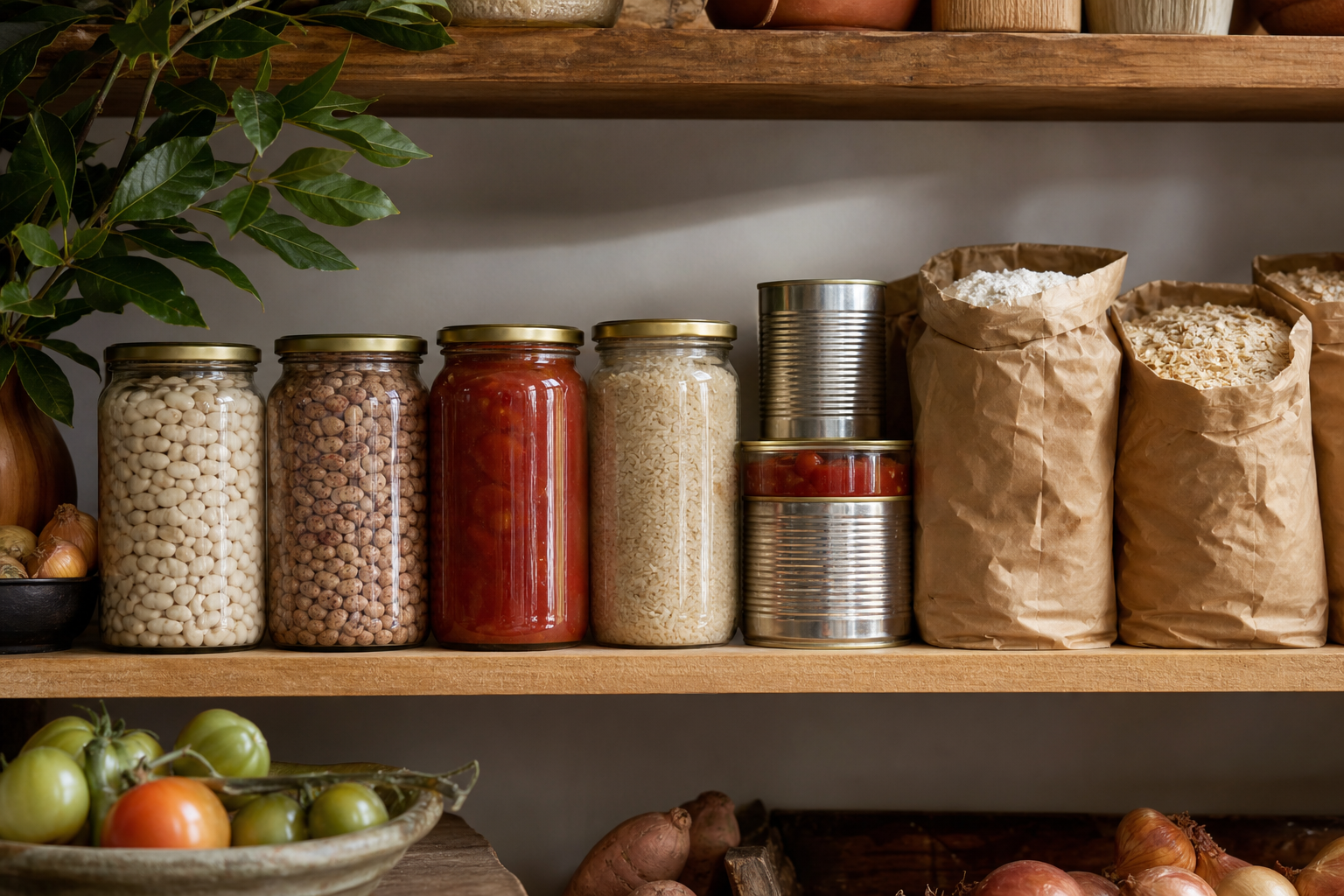
A pantry staple earns its shelf by being cheap per pound, simple on the label and easy to restock. We read the labels and ingredient decks on the core lines (beans, rice, oats and flour, tomatoes), checked sodium wherever salt is added, priced per pound or per unit from the brands' own stores where they sell direct, and read the membership and delivery terms of the one online grocer on the list. Eden Foods is first because its plain beans are cooked with kombu, carry no added salt and come in cans made without BPA; Lundberg wins on rice and Thrive Market on one-stop delivery, and both facts are in the table.
Eden Foods9.0/10
Best for: cooks who want organic beans without added salt
Eden's plain canned beans are organic beans, water and a piece of kombu, with no salt added. The company says its cans have been made without BPA, BPS or phthalates since 1999, a standard it extended to tomatoes and other acidic foods in 2016. Cans are still single-use metal, and the seasoned lines do add salt.
What works
- Plain beans have no added salt
- Cans made without BPA, BPS or phthalates, per Eden
- Three-ingredient deck: beans, water, kombu
What doesn’t
- Single-use cans; dry beans cut packaging and cost
- Seasoned and refried lines add sea salt; only the plain beans are no-salt-added
Price: varies by box/plan Platforms: Online, retail Developer site
Lundberg Family Farms8.7/10
Best for: households that cook rice several times a week
Lundberg is a California family rice grower that sells its organic rice direct in 2 lb and 4 lb bags and 25 lb sacks. The per-pound math is worth doing: on white basmati, the 25 lb sack costs more per pound than the 4 lb bag, while long-grain brown rice is cheapest in the sack.
What works
- Organic white and brown rice, basmati and jasmine
- 25 lb long-grain brown rice works out to about $4.16 a pound
- Upcycled organic jasmine at $7.89 for 2 lb, under $4 a pound
What doesn’t
- White basmati: the 25 lb sack is $5.16 a pound against $4.72 for the 4 lb bag
- Big sacks need airtight storage, and brown rice goes rancid faster than white
Price: $18.89 per 4 lb bag; 25 lb $103.99–$128.99 Platforms: Online, retail Developer site
Bob's Red Mill8.5/10
Best for: bakers and oatmeal eaters who buy in bulk
Bob's Red Mill runs a large certified-organic line of oats, flours and whole grains alongside its conventional range, and the company has been 100% employee-owned since 2020. Organic and conventional bags sit side by side in similar packaging, so the organic seal is the thing to check.
What works
- Wide certified-organic range: oats, flours, whole grains
- 100% employee-owned since 2020
- Larger bags lower the per-ounce price
What doesn’t
- Organic and conventional versions look alike on the shelf
- Per-unit price swings widely by retailer and bag size
Price: varies by box/plan Platforms: Online, retail Developer site
Jovial Foods8.1/10
Best for: cooks who want their tomatoes out of cans entirely
Jovial packs its organic Italian tomatoes in 18.3 oz glass jars with no added salt or sugar, which removes the can-lining question altogether. It also sells organic beans and einkorn flour and pasta. Glass is heavy and breakable, and the price reflects the format.
What works
- Tomatoes in glass, with no salt or sugar added
- Organic tomatoes grown on small Italian farms
- Einkorn flour and pasta for ancient-grain bakers
What doesn’t
- $7.99 a jar for San Marzano tomatoes direct
- Glass is heavy to ship and breakable
Price: San Marzano tomatoes $7.99 a jar; beans $4.29 Platforms: Online, retail Developer site
Thrive Market7.7/10
Best for: households that want one online order for their organic basics
Thrive Market is an online membership grocer with its own organic private label next to national brands. Membership costs $59.95 a year or $12 a month and auto-renews; Thrive refunds the fee if you cancel in the first 30 days and credits the difference in Thrive Cash at renewal if a year's savings don't cover it.
What works
- One order covers most organic pantry staples
- Private-label organic basics
- Full membership refund within 30 days
What doesn’t
- Membership required; auto-renews at $59.95 a year
- Online only, so every order ships in its own box
Price: Membership $59.95/yr or $12/mo Platforms: Subscription, online Developer site
365 by Whole Foods Market7.5/10
Best for: Whole Foods and Amazon shoppers who want organic basics at store-brand prices
Whole Foods' house brand covers the organic basics (beans, grains, pasta, tomatoes, oils) in stores and through Amazon. It is the simplest way to buy organic on a budget, with two limits: you shop where Whole Foods and Amazon deliver, and standard canned lines carry added salt unless the label says otherwise.
What works
- Broad organic store-brand range
- House-brand pricing
- In-store, pickup and Amazon delivery
What doesn’t
- Only at Whole Foods and Amazon
- Standard canned beans and broths are salted; look for no-salt-added labels
Price: varies by box/plan Platforms: Whole Foods, online Developer site
The short version
If the top pick is out of budget, the fourth and fifth entries are the sensible fallbacks — weaker on one axis each, but readable decks.
Questions we get
What was compared?
Ingredient statements, claimed certifications, price per serving and delivery conditions, all from the brand's own pages.
Why not lab-test?
Nothing here has a common lab benchmark. Transparency and price were the comparable facts.
Is this paid?
No. Outbound links earn nothing.
How fresh are the figures?
Priced in November 2026. They drift; the band matters more than the number.
Does organic mean healthy?
No — it describes how it was farmed, not the nutrition.
Scores follow the Canyon rubric. Prices were checked on the date above; app pricing changes often. Written by Greta Hollis.