Pantry · Updated 2026-11-21
Best Natural Sweeteners (2026-2027)
Seven sweeteners ranked on whether the front of the pack matches the ingredient deck. Coombs Family Farms maple syrup leads as one organic ingredient; the monk-fruit and coconut-sugar picks come with more caveats than their labels admit.
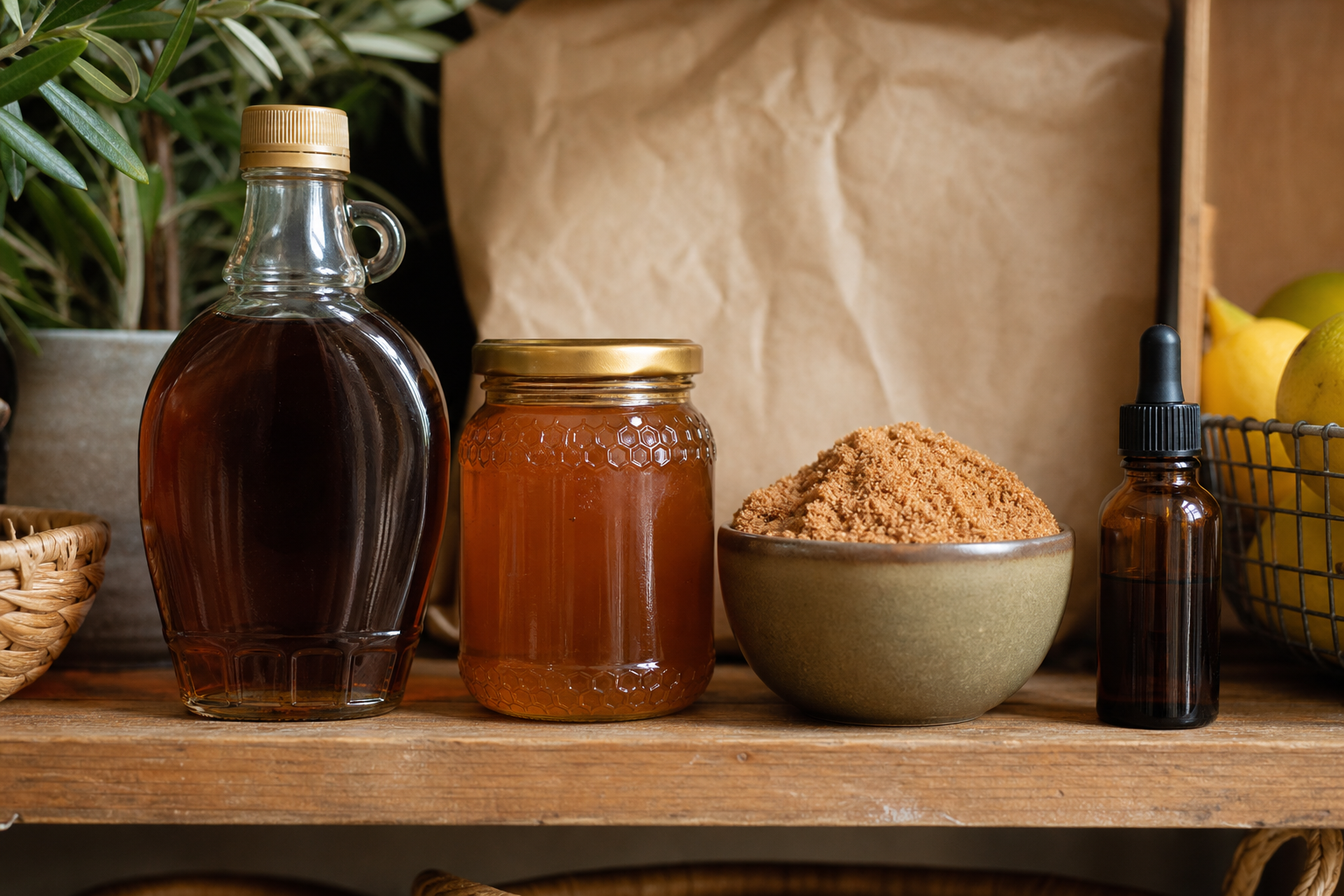
Natural is the loosest word on a sweetener label, so we set it aside and read the rest. We compared the sweetener brands most stocked in natural grocers and online on four things: whether the product is the single ingredient it appears to be, what else is in the deck, the price per ounce and where you can buy it. Coombs Family Farms is first because its organic maple syrup is one ingredient with a grade that tells you what you are getting; Date Lady wins on whole-fruit sweetness and SweetLeaf on zero calories without a bulking agent. A sweetener that leads with monk fruit on the front but is mostly erythritol by weight lost points for the label, however well it bakes.
Coombs Family Farms9.2/10
Best for: everyday use in oats, coffee, dressings and baking
Pure maple syrup is boiled-down maple sap and little else, and Coombs Family Farms adds USDA Organic certification and wide distribution, from Whole Foods to mainstream grocers. It brings a flavour sugar cannot and a little manganese, and the larger jugs keep the price per ounce reasonable. It is still about two-thirds sugar, so the case for it is quality and flavour, not a health halo.
What works
- One ingredient, USDA Organic
- Graded for colour and taste, so you know what is in the bottle
- Widely stocked; bigger sizes cut the per-ounce price
What doesn’t
- Still roughly two-thirds sugar
- Several times the per-ounce cost of cane sugar
- Glass bottles are heavy to ship if you order online
Price: About $10–$14 per 12 oz; larger jugs cost less per ounce Platforms: Whole Foods, online Developer site
Date Lady8.6/10
Best for: swapping refined sugar for fruit in sauces, dressings and baking
Date Lady's date syrup is made from dates and nothing else, and its date sugar is dried dates ground fine, fibre included. That makes it the most whole-food option here, with a caramel depth that suits baking, glazes and dressings. Date sugar will not dissolve in a drink, and both cost more per ounce than cane sugar.
What works
- Single-ingredient syrup made from dates
- Date sugar keeps the fruit's fibre
- Caramel flavour that stands in for brown sugar
What doesn’t
- Date sugar does not dissolve in drinks
- High per-ounce cost next to cane sugar
- Still mostly sugar, whatever the fruit
Price: About $8–$14 per bottle or bag Platforms: Online, retail Developer site
SweetLeaf8.3/10
Best for: sweetening drinks and sauces without sugar
SweetLeaf's liquid Sweet Drops are built on stevia leaf extract with no erythritol or dextrose bulking them out, so a few drops sweeten a coffee with no calories and nothing else to count. The packets add inulin fibre, which is harmless but worth knowing. Stevia does not brown, bulk or caramelise, so it is the wrong tool for most baking, and some people taste a liquorice note at higher doses.
What works
- Liquid drops skip erythritol and dextrose
- Zero calories; does not raise blood sugar
- Low cost per serving once you account for how little you use
What doesn’t
- Bitter or liquorice aftertaste for some palates
- No bulk or browning — a poor swap in most baking
- Packets add single-use waste
Price: About $10–$15 per 2 oz bottle of drops Platforms: Online, retail Developer site
Local Hive7.9/10
Best for: raw honey with a US region of origin on the label
Local Hive sells raw, unfiltered honey from US beekeepers and names the region on each bottle, which tells you more about where the nectar came from than most supermarket honey does. Honey brings flavour and a little goes a long way, but it is still mostly sugar, raw has no legal definition, and it must not be given to babies under one.
What works
- US honey labelled by region
- Raw and unfiltered
- Single-ingredient deck
What doesn’t
- Not for babies under 12 months, because of the botulism risk
- Raw is an unregulated term; heat handling varies by packer
- Costs more per ounce than imported blends
Price: About $8–$14 per 16 oz bottle Platforms: Online, retail Developer site
Wholesome7.4/10
Best for: Fair Trade organic sugars, coconut sugar and allulose from one brand
Wholesome has the broadest natural sweetener range on the shelf — organic cane and brown sugar, coconut sugar, molasses, honey and allulose — and its cane sugars carry Fair Trade certification, which matters on the supply side. The breadth is also the caveat: organic sugar is still sugar, and allulose is a different, low-calorie product with its own trade-offs.
What works
- Fair Trade Certified organic cane sugars
- One brand covers cane, coconut, molasses and allulose
- Widely stocked at mainstream prices
What doesn’t
- Organic sugar is nutritionally the same as conventional sugar
- Costs more per pound than conventional sugar
- Allulose can upset digestion in larger amounts
Price: About $4–$9 per bag, by product Platforms: Online, retail Developer site
Lakanto7.0/10
Best for: 1:1 sugar swaps in low-sugar baking
Lakanto's Classic Monk Fruit Sweetener measures and bakes like sugar, which is why it is the best-known zero-calorie baking swap. The front of the bag leads with monk fruit, but the deck is mostly erythritol with a small amount of monk fruit extract — and erythritol has drawn scrutiny since 2023 research linked high blood levels with heart attack and stroke. Its allulose blend is the alternative if that worries you.
What works
- Measures 1:1 for sugar in most recipes
- Zero net calories
- An allulose version for people avoiding erythritol
What doesn’t
- Mostly erythritol by weight despite the monk-fruit front label
- Erythritol can upset digestion and is under cardiovascular scrutiny
- Many times the per-ounce price of sugar
Price: About $9–$16 per bag, by size Platforms: Online, retail Developer site
Big Tree Farms6.6/10
Best for: a brown-sugar swap from a named producer
Big Tree Farms makes organic coconut sugar from the sap of coconut palm blossoms, sourced from smallholder farmers in Indonesia. It swaps 1:1 for brown sugar and has a pleasant toffee note. But coconut sugar's low-glycaemic reputation is overstated: it is mostly sucrose, so it is a flavour choice rather than a health one, shipped a long way to get here.
What works
- USDA Organic, single ingredient
- 1:1 swap for brown sugar in most baking
- Sourced from smallholder farmers in Indonesia
What doesn’t
- Mostly sucrose; low-GI claims are overstated
- Costs more per ounce than cane sugar
- Long-haul supply chain from Southeast Asia
Price: About $6–$10 per 1 lb bag Platforms: Whole Foods, online Developer site
The short version
For most kitchens, Coombs Family Farms maple syrup is the pick: one organic ingredient that works from porridge to roasting tins. Choose Date Lady if you want sweetness that comes with the fruit's fibre, and SweetLeaf drops if the goal is zero calories in drinks. If you bake low-sugar, Lakanto works, but read the deck and consider the allulose version. Whichever you choose, a natural sweetener is still a sweetener.
Questions we get
What is the healthiest natural sweetener?
There is no clear winner. Maple syrup, honey, date syrup and coconut sugar are all mostly sugar, with small amounts of minerals that do not change the picture. Stevia and monk fruit add no calories; the question there is what else is in the pack. Use less of whichever you like best.
Is monk fruit sweetener really monk fruit?
Mostly not, by weight. Pure monk fruit extract is a couple of hundred times sweeter than sugar, so granulated monk fruit products bulk it out with erythritol or allulose. The ingredient deck lists the bulking agent first.
Is erythritol safe?
It is permitted and widely used, but a 2023 Cleveland Clinic study linked high blood erythritol levels with a greater risk of heart attack and stroke, and the question remains open. People with heart-disease risk may prefer stevia, allulose or small amounts of sugar.
Can babies have honey?
No. Honey can carry Clostridium botulinum spores, which cause infant botulism, so it should not be given to children under 12 months — raw or pasteurised.
Why is Lakanto sixth when it bakes so well?
Because we scored the label, not the cake. The classic bag leads with monk fruit while the deck is mostly erythritol, and that gap — plus the erythritol questions and a high price per ounce — cost it points. Its allulose blend addresses two of the three.
Scores follow the Canyon rubric. Prices were checked on the date above; app pricing changes often. Written by Imogen Patel.