Supplements · Updated 2026-11-21
Best Natural Supplement Brands (2026-2027)
Seven brands ranked on independent testing, clean ingredient decks and the cost of a daily dose. Thorne leads on certification; NOW Foods is the value pick, and subscription-first Ritual has the narrowest lane.
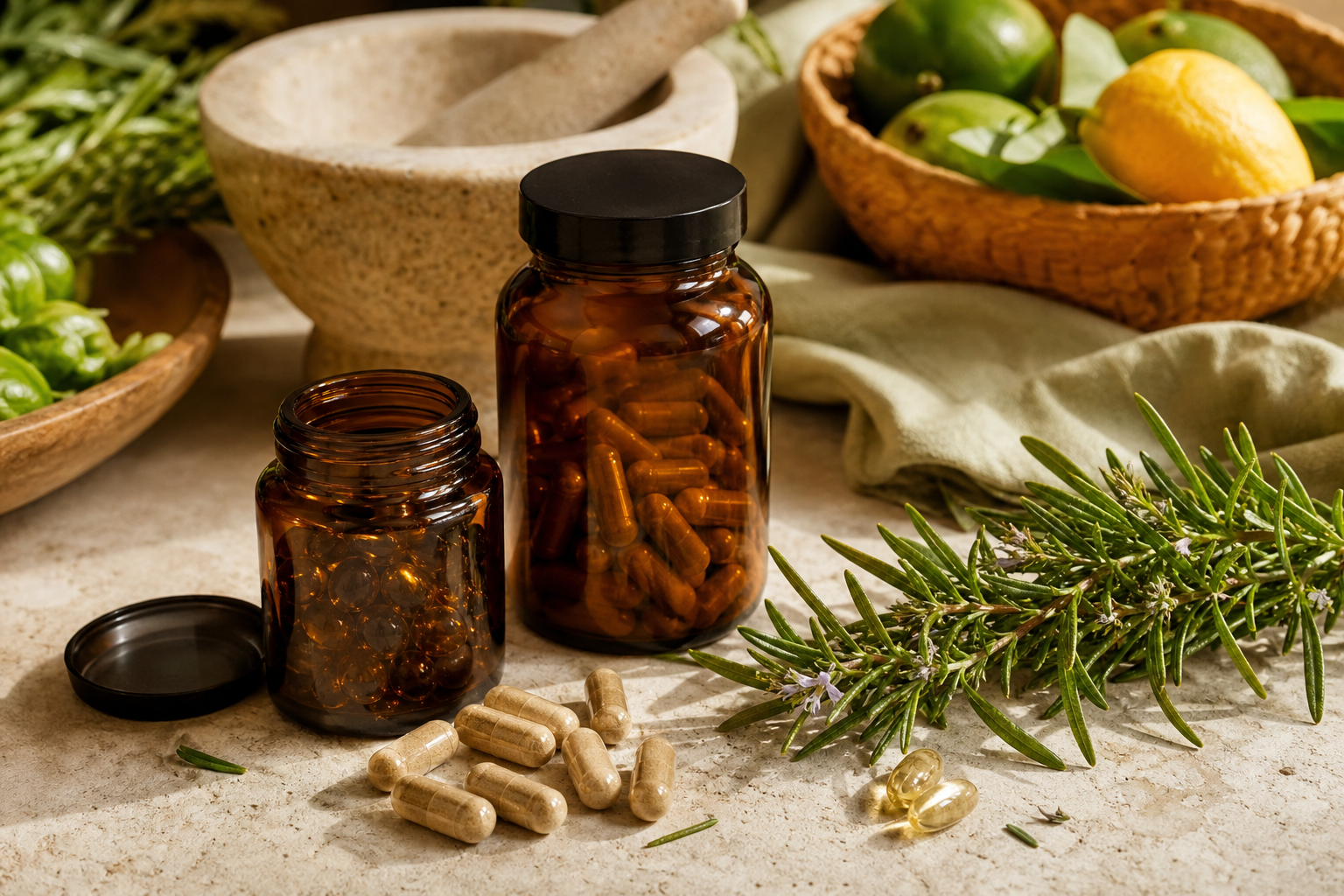
The FDA does not approve dietary supplements before they go on sale, so the label is a promise the maker keeps on its own — which makes independent testing the first thing we looked for. We compared the supplement brands most stocked in natural grocers and online on four things: third-party certification such as NSF or USP, the ingredient deck (nutrient forms, fillers, colours and proprietary blends), the price per daily dose and how the brand sells, including subscription terms. Thorne is first for the depth of its NSF Certified for Sport range; Gaia Herbs is the most transparent herbal brand, and NOW Foods gives the most tested product for the money. None of this replaces a conversation with a doctor or dietitian about whether you need a supplement at all.
Thorne9.3/10
Best for: third-party certified basics in well-absorbed forms
Thorne has one of the largest NSF Certified for Sport catalogues in the industry, favours forms such as methylfolate and glycinate minerals, and keeps fillers to a minimum. That combination of independent testing and a clean deck is why it is first. It is priced like a practitioner brand and sold mostly online, through its own site and Amazon, rather than on grocery shelves.
What works
- Large NSF Certified for Sport range
- Well-absorbed nutrient forms and few fillers
- Broad catalogue, from basics to specialist formulas
What doesn’t
- Priced at the top of the market per daily dose
- Sold mainly online and through practitioners, not in grocery aisles
Price: About $15–$60 per bottle, by product Platforms: Online Developer site
Gaia Herbs8.8/10
Best for: herbal supplements with traceable sourcing
Gaia Herbs grows part of its supply on its own certified organic farm in North Carolina, and its Meet Your Herbs tool lets you enter the ID on a bottle to see where that batch came from and how it was tested. That is the most useful transparency in the herbal aisle, where adulteration is a known problem. The caveats are price and an evidence base that varies from herb to herb.
What works
- Batch-level traceability through Meet Your Herbs
- Certified organic farm in North Carolina
- Stocked at Whole Foods and most natural grocers
What doesn’t
- High per-dose cost next to mass-market herbs
- Evidence varies widely from herb to herb
- Many liquid extracts are alcohol-based
Price: About $15–$45 per bottle, by product Platforms: Whole Foods, online Developer site
NOW Foods8.4/10
Best for: everyday basics at the lowest price per dose
NOW is family-owned, runs a large in-house testing lab and prices its basics — vitamin D, magnesium, omega-3s — well below most natural-channel brands. Many of its sports products carry Informed Sport certification. The catalogue is so large that quality signals vary by product, so look for the third-party seal on the bottle you are actually buying.
What works
- Lowest price per dose among the brands here
- Large in-house testing programme
- Many sports products carry Informed Sport certification
What doesn’t
- Huge catalogue; third-party seals vary by product
- Plastic bottles across most of the range
Price: About $8–$30 per bottle, by product Platforms: Online, retail Developer site
Nordic Naturals8.1/10
Best for: fish oil and other omega-3s
Nordic Naturals does omega-3s better than almost anyone in the natural aisle: triglyceride-form fish oil, third-party purity testing and certificates of analysis you can look up by lot. It is narrower than the brands above it, and fish oil is a product where freshness and price per gram of EPA and DHA matter more than the front label.
What works
- Triglyceride-form fish oil with lot-level certificates of analysis
- Third-party tested for purity and freshness
- Algae-based omega-3s for vegetarians
What doesn’t
- Higher cost per gram of EPA and DHA than mass-market fish oil
- Thinner range outside omega-3s
Price: About $20–$55 per bottle, by product Platforms: Whole Foods, online Developer site
Garden of Life7.6/10
Best for: certified organic multivitamins and probiotics
Garden of Life's mykind Organics vitamins are USDA Organic and Non-GMO Project Verified, made from food-derived ingredients, and the brand is a fixture at Whole Foods; its Sport line carries NSF Certified for Sport. Organic certification describes how ingredients were grown, not how well the nutrients absorb, and some of its probiotics need refrigeration — a cold-chain problem if you order online.
What works
- USDA Organic, Non-GMO Project Verified multivitamins
- NSF Certified for Sport on the Sport line
- Easy to find at Whole Foods and natural grocers
What doesn’t
- Some probiotics need refrigeration, which complicates online orders
- Organic premium on the price per daily dose
Price: About $20–$50 per bottle, by product Platforms: Whole Foods, online Developer site
MegaFood7.1/10
Best for: whole-food-based multivitamins
MegaFood builds its multivitamins around whole-food ingredients from farm partners and tests for pesticide and glyphosate residues, which made residue testing a selling point in the vitamin aisle. Several formulas ask for two tablets a day, and the price per daily dose sits well above conventional multis.
What works
- Whole-food-based formulas
- Tests for pesticide and glyphosate residues
- Widely stocked in natural grocers
What doesn’t
- Several formulas are two tablets a day
- High price per daily dose
- Whole-food origin does not mean higher potency
Price: About $20–$50 per bottle, by product Platforms: Whole Foods, online Developer site
Ritual6.7/10
Best for: people who want a minimalist multivitamin delivered monthly
Ritual sells a short-list multivitamin by subscription and publishes the supplier and manufacturing location for each ingredient; its core multis carry USP Verified status. The formula is deliberately narrow: it skips nutrients most people get from food, which suits some diets and leaves gaps in others. It is built to keep shipping until you cancel.
What works
- Ingredient traceability published for each nutrient
- USP Verified on its core multivitamins
- Delayed-release capsule designed to be easier on the stomach
What doesn’t
- Subscription-first: it keeps shipping until you cancel
- Narrow formula leaves gaps some people need to fill elsewhere
- Higher price per daily dose than conventional multis
Price: About $30–$40 a month on subscription Platforms: Subscription Developer site
The short version
If you want one brand to trust across the basics, Thorne is the pick, provided the price works for you. Gaia Herbs is the herbal brand to buy if you care where the plant came from, and NOW Foods covers everyday staples for a fraction of the cost — check for the third-party seal on each bottle. Choose Nordic Naturals for fish oil. Ritual suits people who want a minimalist multi on autopilot, as long as they know what it leaves out.
Questions we get
Are supplements regulated by the FDA?
Yes, but after the fact. Under US law, makers are responsible for the safety and labelling of their products, and the FDA does not approve supplements before they are sold. That is why independent certifications such as USP Verified and NSF matter.
What do USP Verified and NSF Certified for Sport mean?
Both confirm that a product contains what the label says in the stated amounts, does not contain harmful levels of specified contaminants and was made under good manufacturing practices. NSF Certified for Sport also screens for substances banned in sport.
Are natural or whole-food vitamins better absorbed?
Not as a rule. Some forms absorb better than others — magnesium glycinate over magnesium oxide, for instance — but that is about the form, not whether it came from food. Judge a vitamin by its dose, its form and its third-party testing.
Do I need a multivitamin?
Many people eating a varied diet do not. Some groups have specific needs — folic acid before and during pregnancy, vitamin B12 on a vegan diet, vitamin D in low-sunlight months — so ask your doctor or a registered dietitian before you buy.
Why is Ritual last?
Its traceability and USP Verified status are real strengths. But it sells by subscription, its formula is deliberately narrow so many people still need a second product, and it costs more per daily dose than a conventional multi.
Scores follow the Canyon rubric. Prices were checked on the date above; app pricing changes often. Written by Imogen Patel.