Delivery & boxes · Updated 2026-11-21
Best Fermented Foods to Order Online (2026-2027)
Seven makers and grocers ranked on whether live food arrives live. South River Miso leads because miso needs no cold chain; Wildbrine is the best raw kraut and kimchi you can add to a grocery order.
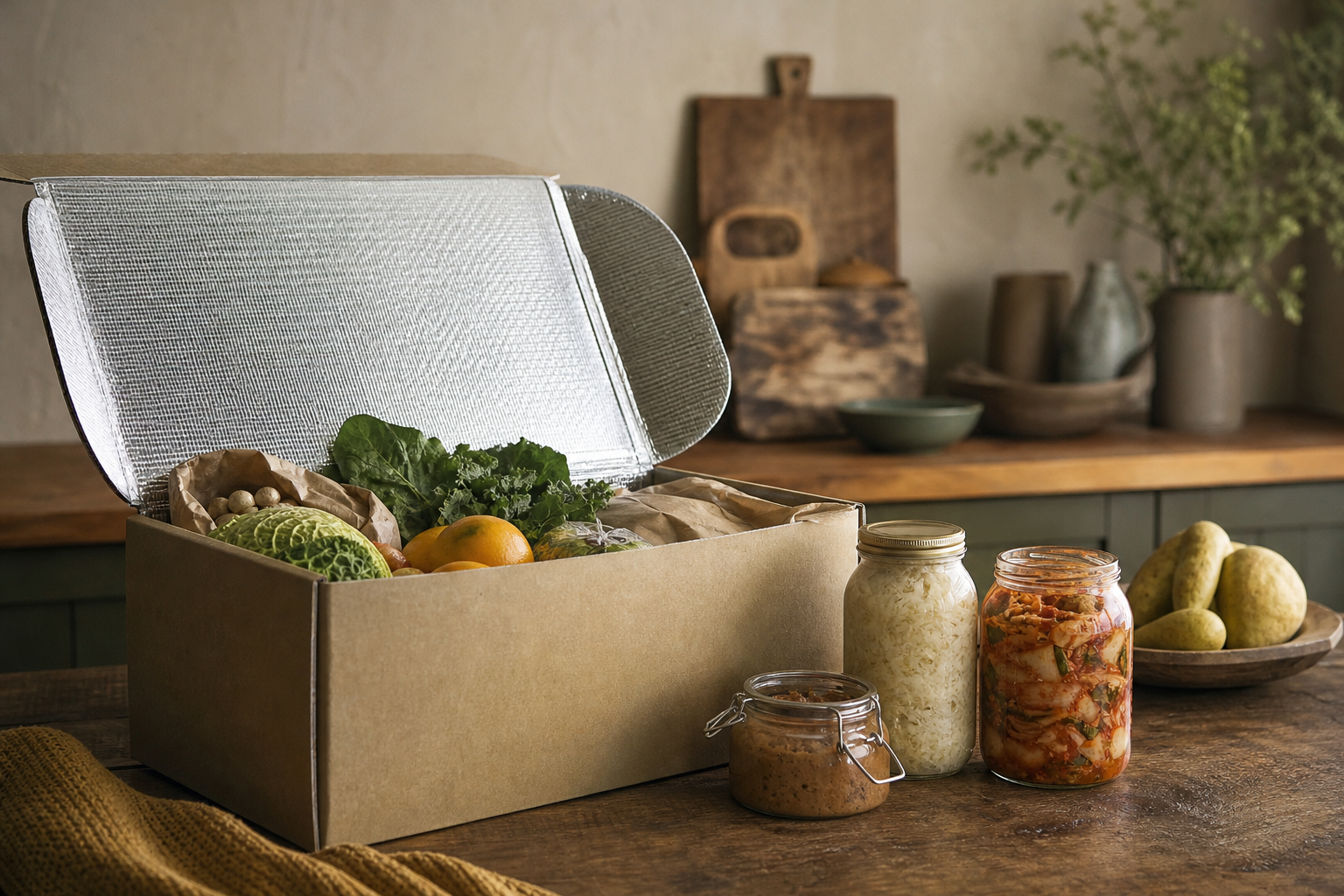
Ordering fermented food online is a cold-chain question before it is a taste question. Raw sauerkraut, kimchi, kefir and kombucha need to stay cold to keep their cultures alive, which means insulated boxes, ice packs and delivery zones; miso and dried starter cultures travel by ordinary post. We compared the makers and grocers most readers can actually order from on four things: whether the label says raw, unpasteurised or live cultures, what is in the ingredient deck, the price per jar or bottle, and the delivery terms. South River Miso is first because it ships a live, small-batch food that needs no cold chain; Wildbrine is the best raw kraut and kimchi through grocery delivery, and Cultures for Health is the cheapest route of all if you will ferment at home.
South River Miso9.1/10
Best for: traditional, unpasteurised miso shipped anywhere
South River has made miso by hand in western Massachusetts since the early 1980s and sells it direct in glass jars — organic, unpasteurised and aged, some varieties for three years. Miso is salty enough to travel at room temperature, so you get a live, small-batch ferment without the ice packs and liners the rest of this list depends on. The trade-offs are the salt, the weight of glass and a price well above supermarket tubs.
What works
- Organic, unpasteurised and long-aged
- Soy-free options, including chickpea miso
- No cold chain needed: miso travels at room temperature
What doesn’t
- High sodium, as with all miso — several hundred milligrams per tablespoon
- Glass is heavy to ship, so small orders carry a large shipping share
- Costs several times more per ounce than supermarket miso
Price: About $10–$22 per jar by size, plus shipping Platforms: Online Developer site
Wildbrine8.8/10
Best for: raw sauerkraut and kimchi added to a grocery delivery
Wildbrine's sauerkraut and kimchi are raw and unpasteurised, made in Sonoma County and kept refrigerated from the brinery to the store. You order it through Whole Foods and other grocery delivery services, which is what keeps the cold chain intact. The decks are short — vegetables, salt and spices — and the price is fair for a live product.
What works
- Raw and unpasteurised, with live cultures
- Short decks: vegetables, salt and spices
- Easy to add to an existing grocery delivery
What doesn’t
- Needs refrigerated delivery, so availability depends on your grocer's delivery zone
- Salty by design, like all kraut and kimchi
Price: About $6–$9 each Platforms: Whole Foods, online Developer site
Cultures for Health8.4/10
Best for: people willing to make their own kefir, kombucha, yoghurt or kraut
Cultures for Health sells the starters rather than the food: kefir grains, kombucha cultures, yoghurt and vegetable starters, mostly dried and shipped at room temperature. Kefir grains and kombucha cultures keep going batch after batch, so the cost per jar of finished food ends up below anything else here. You supply the time, the jars and some patience with a failed first batch.
What works
- Dried starters ship by ordinary post — no cold chain
- Lowest cost per finished jar once a culture is established
- Detailed how-to guides for each culture
What doesn’t
- Takes time and kit: jars, weights or airlocks, a steady temperature
- A failed batch costs you the starter and the ingredients
Price: About $10–$20 per starter culture Platforms: Online Developer site
Weee!7.9/10
Best for: kimchi, doenjang, natto and other Asian ferments
Weee! is an Asian grocery delivery service, and its refrigerated range runs deeper into fermented food than any general grocer: several kimchi brands, gochujang and doenjang, miso, natto and fermented tofu. It delivers with its own drivers in many metro areas and ships a narrower range elsewhere. Read the decks — some kimchi is pasteurised or carries added sugar and preservatives — and expect plenty of insulated packaging.
What works
- Deepest range of Asian ferments of any service here
- Refrigerated and frozen delivery in many metro areas
- No membership needed
What doesn’t
- Insulated liners and ice packs on refrigerated orders
- Decks vary: some kimchi is pasteurised or sweetened
- Free delivery depends on a basket minimum
Price: Free to join; varies by box/plan Platforms: Online Developer site
Lifeway Kefir7.6/10
Best for: an everyday cultured drink at a low price per serving
Lifeway is the kefir most grocery delivery services carry, and the plain unsweetened bottle is the one to order: cultured milk with a dozen live and active cultures and no added sugar. It is inexpensive per serving, but it is fully cold-chain — order it with a refrigerated grocery delivery and finish it before the date. The flavoured bottles add cane sugar.
What works
- Advertises 12 live and active cultures
- Plain unsweetened version has no added sugar
- Low cost per serving next to other cultured drinks
What doesn’t
- Fully cold-chain: refrigerated delivery only
- Flavoured bottles add cane sugar
- Plastic bottles
Price: About $4–$6 per 32 oz bottle Platforms: Whole Foods, online Developer site
GT's Living Foods7.0/10
Best for: raw kombucha drinkers who already use grocery delivery
GT's raw kombucha is the most widely stocked live kombucha in the US, sold refrigerated in glass bottles at Whole Foods and most grocers. Ordering it online means grocery delivery, since the bottles have to stay cold. It sits here rather than higher because the per-bottle price adds up fast for a daily habit, and glass is heavy to move.
What works
- Raw and unpasteurised
- Short decks: tea, culture and juice
- Stocked by most grocery delivery services
What doesn’t
- Per-bottle cost adds up for a daily habit
- Heavy glass and cold-chain delivery
- Juice-flavoured bottles add sugar
Price: About $3.50–$5 per 16 oz bottle Platforms: Whole Foods, online Developer site
Thrive Market6.5/10
Best for: existing members who want shelf-stable ferments with the rest of the pantry
Thrive Market is a membership grocer, and for fermented food its strength is the shelf: raw apple cider vinegar, tamari and other ferments that keep at room temperature, shipped without ice. The live, refrigerated range — kraut, kimchi, kefir — is thin, and you pay the membership before you buy a single jar.
What works
- Good shelf-stable range: raw vinegar, tamari and pantry ferments
- Ambient shipping, so no ice packs on pantry orders
- Member pricing on pantry staples
What doesn’t
- Membership required before you can order
- Few live, refrigerated ferments
Price: Membership from about $60/yr; basket varies by box/plan Platforms: Subscription Developer site
The short version
Start with South River Miso if you want a live, traditional ferment delivered anywhere without ice packs, and add Wildbrine to your next grocery delivery for raw kraut and kimchi. If you are willing to ferment at home, Cultures for Health is the cheapest route to a steady supply. Weee! is the pick for Korean and Japanese ferments, and Thrive Market only makes sense if you already pay for the membership.
Questions we get
Does fermented food survive shipping?
It depends on the food. Miso, dried starter cultures and raw vinegars are stable at room temperature and ship by ordinary post. Raw sauerkraut, kimchi, kefir and kombucha need to stay cold to keep their cultures active and their flavour in check, so order them through refrigerated delivery.
How do I know a fermented food still has live cultures?
Look for raw, unpasteurised or live and active cultures on the label, and buy it from the chiller. Shelf-stable sauerkraut and pickles from the centre aisles are usually pasteurised, and many are made with vinegar rather than fermented at all.
Is the sodium in fermented food a problem?
Salt is part of how vegetables ferment safely, so kraut, kimchi and miso are salty by design. Treat them as condiment-sized servings — a forkful or a spoonful — and count them if you are watching sodium.
Is it safe to ferment at home?
Vegetable ferments such as sauerkraut are among the safer home projects if you follow a tested recipe: enough salt, vegetables kept under the brine and clean jars. Throw out anything slimy, pink or fuzzy with mould, and follow the starter maker's instructions for kefir and kombucha.
Why is Thrive Market last?
It ships pantry ferments well, but the membership comes first and its live, refrigerated range is thin. It suits people already paying for Thrive, not anyone joining just for fermented food.
Scores follow the Canyon rubric. Prices were checked on the date above; app pricing changes often. Written by Imogen Patel.